I’ve been tracking a persistent frozen video issue during intense recording sessions on my system. I run OBS 27.0.0 on Windows 10 build 19041, and logs show the device stalls when data throughput spikes.
My setup suggests the internal link between the device and motherboard may not handle peak speeds. That mismatch can cause dropped frames, a stalled stream, or a blank screen at critical times.
In this guide I’ll help you check drivers, update software, and tweak settings so your video source runs smoother. Small changes to resolution and frame rate often fix many common problems.
Key Takeaways
- Verify your system name and configuration to spot throughput bottlenecks.
- Keep drivers and software up to date to reduce compatibility issues.
- Lower resolution or frame rate during peak times to avoid dropped frames.
- Check USB and port links if your external device behaves like an internal one.
- Use logs from OBS 27.0.0 and Windows 10 build 19041 to guide troubleshooting.
Understanding PCIe Capture Card Freezing
When I upgraded to the MSI Z690 PRO, I started to see my cam link and elgato cam show intermittent frozen video during heavy streams.
These devices rely on a steady data and power flow from the motherboard. If the link between the device and slot drops or saturates, the stream can stall or the screen can go black. I tested power delivery and USB routing to make sure the elgato cam was getting what it needed.
Common signs include sudden black screens, dropped frames, or the device disappearing from software. Simple misconfiguration or outdated drivers and firmware often cause these issues. I found that checking the exact name and version of my hardware helped guide updates and support steps.
Tip: Start by confirming the device name in your software, then check driver and firmware updates. Small tweaks in settings or moving the device to another high-speed port can restore stable video and reduce interruptions.
- Confirm device name and version in your software.
- Check drivers and firmware updates for your cam link and elgato cam.
- Try a different USB port or move the device to reduce link congestion.
Evaluating Your Computer Hardware Resources
I noticed my recordings stutter when the system hits high CPU and memory use during long sessions. If the processor and RAM are tied up, a live stream or local recording can display dropped frames and a stalled screen.
CPU and Memory Bottlenecks
My Intel Core i5-3360M runs at 2.80GHz with two physical cores and four threads. It often climbs to 100% during high-bitrate encoding, which I found to be the main cause of frozen video on my setup.
With only 4027MB of physical memory, the system struggles to buffer large video frames. Upgrading RAM or lowering output resolution and frame rate is an effective quick fix.
GPU Encoding Capabilities
My RTX 2080 Ti can handle hardware encoding, but only if the software uses that mode. I checked software settings to enable NVENC and moved encoding work off the CPU.
Tip: Verify your streaming software is set to use GPU acceleration and update drivers to avoid software conflicts.
- Watch Task Manager for competing background apps.
- Lower resolution or frame rate when CPU peaks.
- Enable hardware encoding in software settings where available.
| Component | Observed Limit | Recommended Action |
|---|---|---|
| Intel i5-3360M | CPU hits 100% during encode | Reduce quality, close background apps, consider CPU upgrade |
| System RAM | Approximately 4GB total | Upgrade to 8GB+ to handle high-bitrate video |
| RTX 2080 Ti | Underused unless NVENC enabled | Enable GPU encoding in software and update drivers |
Checking Video Source and Cable Integrity
The first thing I do is inspect the HDMI and USB links to rule out a loose wire or bad port. A poor connection often looks like a sudden black screen or dropped frames, and it is the easiest fix.
Testing External Output Devices
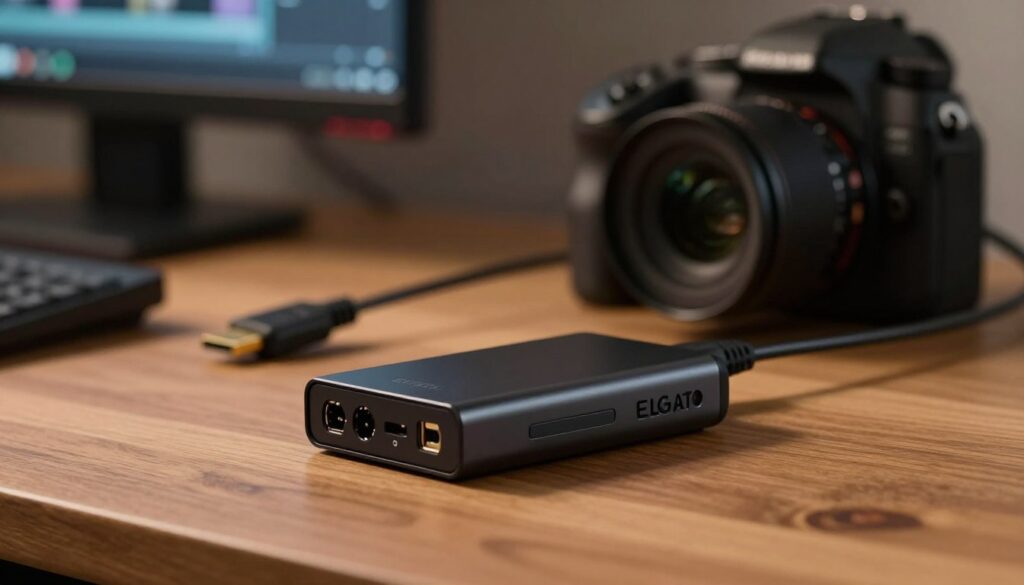
I always double check port connections when my elgato cam link starts acting up. Sometimes the HDMI plug is loose or the USB port has low contact, and swapping ports solves the issue fast.
I test the video source on a separate monitor to confirm whether the console or the device is at fault. If the source looks fine on another display, the problem usually lies with the capture device or its settings.
“I found switching to a different USB port fixed my stuttering stream within minutes.”
- Double check port integrity and switch ports to see if the issue clears.
- Use a high-quality HDMI cable and keep length within recommended limits for the device.
- Verify port settings in software so the source resolution and frame rate match what the device expects.
| Test | What I Check | Quick Action |
|---|---|---|
| Port connection | USB contact, HDMI seating | Reseat cable, try alternate port |
| Source output | Console/PC video on separate monitor | Confirm if source or device is faulty |
| Cable quality | HDMI spec and length | Replace with high-quality short cable |
Optimizing Software Encoding Settings
My logs made it clear: software encoding was the weak link when my system strained. I saw 6,350 of 7,216 frames skipped due to encoding lag and 4,941 frames lagged from rendering stalls.
I first reduced output resolution and lowered bitrate. That alone cut rendering lag and let my cam link and elgato cam keep a steadier video stream.
I tested encoder presets in OBS. Moving from “veryfast” toward “ultrafast” eased CPU load. I also tried GPU mode when available to move work off the processor.
Pro tip: if you use a facecam elgato facecam, set a modest resolution for the facecam and disable extra filters. That prevents the elgato facecam elgato from overwhelming the system during long sessions.
- Lower resolution and bitrate to match your hardware.
- Try different encoder presets and enable GPU encoding if possible.
- Keep USB ports and the device driver up to date to reduce stalls.
Managing USB Transfer Modes and Ports
I start by mapping every USB header and port on my board to find the true high-speed connections. This step helps me know where to use a cam link and avoid shared lanes that throttle video flow.
Identifying High Speed Ports
Look for real 3.0 ports: I check the motherboard manual and label ports physically. Some blue ports are fast, but others share bandwidth with SATA or front-panel headers.
If I plan to use cam link or an elgato cam link, I always pick a dedicated 3.0 port. That prevents the device from competing with other hardware during a heavy stream.
Adjusting Transfer Mode Settings
I change usb transfer mode in Device Manager when a device shows stutter or odd behavior. Switching protocols or reinstalling the driver can force a better mode and steady the video feed.
Tip: After you change usb transfer settings, reboot and test at the target resolution to confirm stability.
| Port Type | How I Identify It | When to Use |
|---|---|---|
| USB 3.0 (native) | Manual + blue port + chipset notes | Use for elgato cam link and high-bitrate capture |
| Shared 3.0 | Manual indicates shared lanes | Avoid if multiple devices are active |
| USB 2.0 | Older headers, slow transfer | Use for peripherals, not video |
Updating Drivers and Firmware
Keeping firmware and drivers current is one of the fastest ways I stop strange video problems. I make it a habit to install the latest version of the elgato camera hub as soon as updates appear.
The elgato camera hub gives firmware updates and simple diagnostics that help me spot a flaky device. Run the hub and follow prompts to update the firmware and software to the latest version.
I also update my usb controller drivers from the motherboard or laptop maker. Old usb controller drivers often fail to handle high throughput from a cam link, so I check the manufacturer site and install the recommended driver.
- Use the elgato camera hub to apply firmware and see diagnostics for your cam link.
- Download usb controller drivers from your PC or board vendor, not third-party sites.
- Keep your capture software and card utilities on the latest version to avoid post-Windows update issues.
Adjusting Resolution and Frame Rate Configurations
I learned that small tweaks to resolution and frame rate yield the biggest stability gains during fast gameplay. Changing a few settings often stops dropped frames and keeps the video steady without a major quality hit.
Balancing Quality and Performance
Start conservative: I set my source resolution frame settings to 1080p at 30fps and saw much more reliable performance from my elgato cam link.
Match your source to the device limits. If your card or capture device struggles at 60fps, drop to 30fps. That reduces processing and helps the usb link stay stable.
Test combinations: try 720p60, 1080p30, and a mid option like 900p30 to find the sweet spot. I recommend testing each for a few minutes under real load.
- I found balancing resolution frame rate prevents my cam link from stalling during high-motion scenes.
- Always match source resolution frame to the capabilities of your card and device to avoid extra overhead.
- Adjusting these settings can greatly reduce system load and improve long streaming sessions.
Investigating Potential PCIe Bandwidth Limitations
I found the real bottleneck when my board was not using its fastest slot for the device. Moving the slot made an immediate difference in how stable my video feed felt.
If your motherboard is pcie 4.0 capable, make sure the device sits in that specific slot. Some boards label lanes, and not every slot runs at full speed when other ports are active.
I discovered my elgato cam was running in a slower slot. Once I moved the card to a pcie 4.0 capable slot the stream stopped stuttering and the elgato cam produced a steady picture.
- Check the manual to see which slots are pcie 4.0 capable and which share lanes with other hardware.
- Move the device to an isolated slot if possible to avoid shared bandwidth from other USB or storage devices.
- Confirm BIOS settings and driver updates so the link and settings reflect the maximum throughput.
| Symptom | Likely Cause | Quick Fix |
|---|---|---|
| Intermittent stalls in video | Device in non-pcie 4.0 capable slot | Move to a pcie 4.0 capable slot, update drivers |
| Low throughput under load | Shared lanes with other devices (usb or storage) | Relocate devices or disable sharing in BIOS |
| Odd performance after changes | Mismatched settings or outdated firmware | Check device settings, update firmware and drivers |
Seeking Professional Technical Support
When local fixes fail, contacting a support team can save hours of guesswork. I recommend you contact customer support as a clear next step when the problem persists.
Prepare your details: list your full system specs, attach logs, and describe the exact video symptoms. This helps teams identify if the device or source is the issue and whether a specific resolution is needed.
I have found elgato customer support very responsive when I send system logs and a step-by-step timeline. They often ask for the same files I used while testing settings so they can reproduce the problem on their side.
If the issue continues, elgato customer support can walk you through advanced diagnostics not in public manuals. They also access internal knowledge bases that solve uncommon device problems faster.
- Contact customer support with system specs and logs for faster triage.
- Include screenshots of video errors and your current settings.
- Don’t hesitate to contact customer support — it often leads to a definitive fix.
Conclusion
I close by saying the best fixes come from testing one variable at a time: slot, cable, driver, then encoder. That step-by-step approach helped me find the weak link and restore steady video quickly.
Start with hardware — check the physical connections and the slot you use. Then tune software settings, lower the resolution if needed, and update drivers so the card performs reliably.
Keep your source steady and avoid swapping too many devices on the same bus. A stable link between source and PC is the single biggest factor for clean recordings and smooth playback.
I hope this guide helps you troubleshoot with confidence and get back to streaming without interruptions.
FAQ
Why does my internal capture device keep freezing when I try to record high-resolution video?
How do I tell if my CPU or RAM is causing video stuttering or dropped frames?
Can my graphics card help prevent freezes by handling encoding?
What cables and source checks should I perform if the video freezes randomly?
How can I test external output devices like cameras or game consoles for intermittent drops?
Which encoder settings tend to cause fewer interruptions during streaming or recording?
How do I identify high-speed USB ports that work best with devices like Elgato Cam Link?
Can I change USB transfer mode to stop video from freezing, and how?
Are firmware and driver updates important for stable recording?
How should I balance resolution and frame rate to prevent dropped frames on limited systems?
How do I check if my motherboard or system has bandwidth limits that cause intermittent freezes?
When should I contact technical support for persistent video interruptions?

Lucas Bennett is a video capture and streaming expert who specializes in helping creators build high-performance setups. He shares in-depth reviews, setup guides, and optimization tips focused on capture cards and real-time video production, making complex tech simple and effective.